Pavlova
A stunning treat for the eyes and mouth.
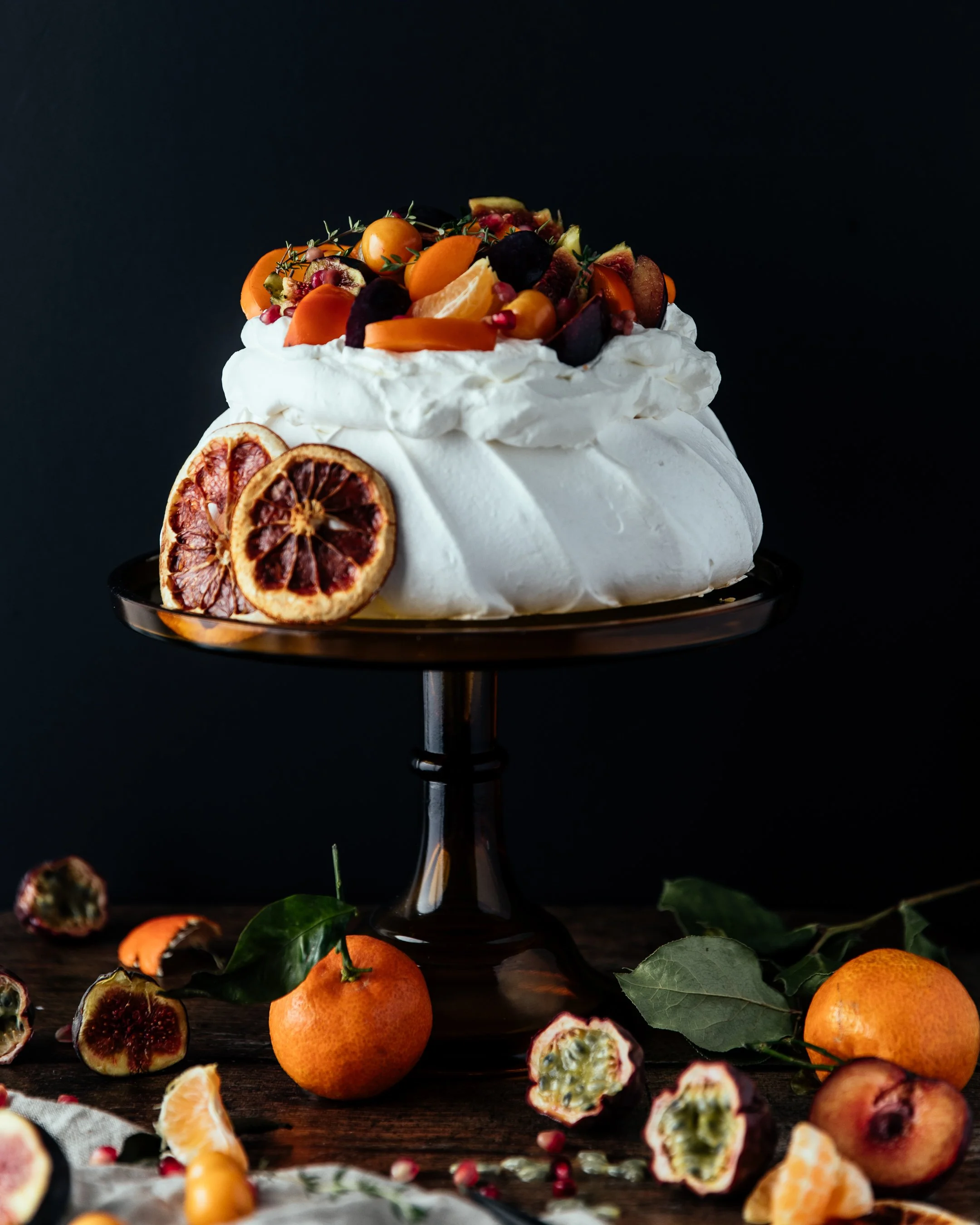
Few desserts manage to be both impressive and effortless quite like the pavlova. Named after the Russian ballerina Anna Pavlova during her tour of Australia and New Zealand in the 1920s, this dessert was supposedly created to capture the lightness and grace of her dancing. Both countries claim it as their own invention, and the friendly rivalry continues to this day, but what we can all agree on is that it's absolutely magical to eat.
And speaking of magic—welcome to the very first post on this blog! Publishing on Christmas Day feels fitting, like a little present to myself. I've been thinking about starting this space for a while now, and I decided the best gift I could give myself was the motivation to actually begin. So here we are, and I'm planning to share plenty more recipes, stories, and inspiration throughout 2026 and beyond.
What makes pavlova so brilliant is its versatility across the seasons—the meringue base stays the same, but you can dress it up with whatever fruit is at its peak.
Winter, reach for citrus supremes, pomegranate arils, and poached pears for jewel-toned elegance
Spring, calls for the first strawberries of the season, maybe some rhubarb compote, or delicate slices of fresh apricot
Summer, pavlova's moment to truly shine with peak berries—raspberries, blueberries, blackberries, and those perfect summer strawberries, or go tropical with passion fruit, mango, and kiwi.
Fall, roasted figs, caramelized apples, and fresh persimmon slices bring warmth and depth to that sweet, airy base.
No matter the season, pavlova is your canvas—crisp, sweet, and endlessly adaptable to whatever looks beautiful at the market.
Pavlova
Ingredients
- 6 large egg whites
- 350g caster sugar
- 2 tsp lemon juice
- 2 tsp cornflour
- 1 tsp vanilla extract
- 600ml Double cream
- An assortment of fruit (pictured, blood oranges, plums, clementines, passion fruit, pomegranate, and figs)
Instructions
- To make the pavlova preheat the oven to 130°C and line a baking tray with parchment paper, drawing an 8-inch circle on the back as a template.
- Rub a cut lemon around the inside of your bowl, this adds a little acid to help stabilise the meringue but also remove any residual fat on the sides of the bowl. Add the egg whites to the bowl and using an electric mixer whisk on medium speed. When whisking the bubbles will start off large and the mixture will still look rather wet. When the bubbles have increased in amount but become smaller in size, slowly start adding the sugar a tablespoon at a time. Continue whisking at medium speed until the meringue is stiff and glossy. You should also be able to rub the meringue between your fingers and not feel any sugar grains.
- Add the cornflour, lemon juice and vanilla and whisk for a couple minutes to combine evenly. Scrape the meringue onto the parchment paper, pilling high in the middle of the circle. To create a decorative pattern carefully spread the meringue to the edges of the circle and like you’re a smoothing the buttercream on the sides of a cake, smooth out the sides of meringue so it is high and smooth. Use the back of your spatula to draw lines onto the sides of pavlova, at an angle, repeating around the whole side of the pavlova. Make these marks quite deep as they will lose some definition in the oven.
- Place the pavlova into the oven and bake for 10 minutes before reducing the temperature to 90°C and baking for a total of about 90 minutes. Turn the oven off and allow the pavlova to cool fully in the oven. This slow cooling down helps prevent the pavlova from cracking too much.
- To serve top the pavlova with lightly whipped cream and lots and lots of fresh fruit. Featured in the recipe image is blood oranges, plums, clementines, passion fruit, pomegranate, and figs. Once topped with cream and fruit serve immediately.
Bittersweet Bites
Making ahead: make the meringue of the Pavlova and once completely cooled, do not top with the whipped cream or fruit, store in an airtight container at room temperature for up to 1 month.
